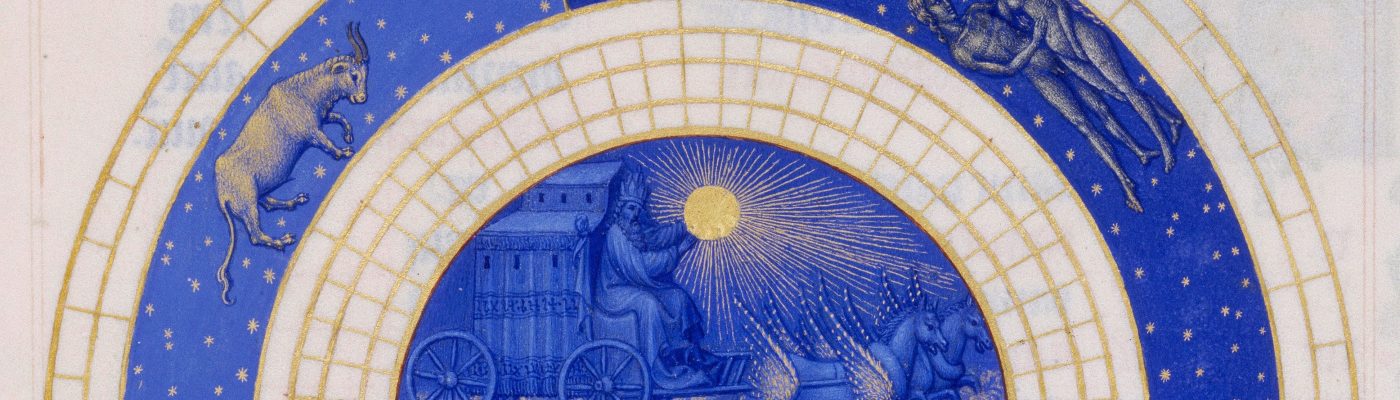
EMREM Symposium 2013: Programme & Registration Form

Standard

Birth, Sex and Death: Rites of Passage in the Medieval and Early Modern World

EMREM Postgraduate Forum Annual Symposium 2013

Thursday 23rd and Friday 24th May 2013
University of Birmingham

Registration Open

To register for free, please fill out the EMREM Symposium 2013 Registration Form and return it to us at emremforum@googlemail.com as soon as possible, as there are limited places available. If you have any trouble with the link to the registration form, please send us an e-mail to the above address and we will send it to you directly.

Programme

To view our conference poster, please click here.

Day One – Thursday 23rd May 2013

10.00 Registration & Refreshments
11.00 Welcome Address

11.15-12.45 Panel 1: An Adaptable Institution? Marital Traditions & Innovations
Rosa Goodman (Oxford) – Sex and the City: Understanding Quattrocento Cassoni through a Civic Lens
Chloë Hancox (Birmingham) – The marriages of Baroque castrati: normal or abnormal?
Anne Thompson (Warwick) – ‘A woman fitte & meete for that callinge’: an investigation of letters testimonial written on behalf of prospective clergy wives in the reign of Elizabeth

Lunch

13.30-15.00 Panel 2: Perilous Beginnings: Negotiating Nativities
Elizabeth Sharrett (Birmingham) – Without idolatry or superstition’: Re-forming childbed rituals in post-Reformation drama
Sarah Fox (Manchester) – Continuity and Tradition: the ‘peculiar rites and customs’ of childbirth in the Long Eighteenth Century
Elaine Hoysted (Cork) – Death in Childbirth: A Privileged Status for the Renaissance Florentine Woman? A Case Study of Giovanna degli Albizzi Tornabuoni

Refreshments

15.30-17.00 Panel 3: Living With Death: Anticipation & Narration
Beth Spacey (Birmingham) – Interfacing with the dead in Latin narrative histories of the First Crusade
Geoffrey Humble (Birmingham) – Dying in the ‘Outer Darkness’? Reading Elements of Cultural Identities in Death Narratives from the Yuanshi (元史, History of the Yuan Dynasty)
Sarah Dickinson (Gloucestershire) – Preparation and Performance: Puritan Experiences of Dying in Early Modern England

Wine Reception

Day Two – Friday 24th May 2013

10.30 Registration & Refreshments

11.00-12.30 Panel 4: Pleasures of the Flesh: Sexual (Ir)regularities
Martin Laidlaw (Dundee) – ‘If gold ruste’: The medieval theological quandary of lascivious priests and avaricious clergy
Claire Harrill (York) – ‘he wald have fukkit’: The realities of sex in courtly love in the poetry of William Dunbar
Raymond Carlson (Cambridge) – Tullia d’Aragona and the regulation of Florentine homosocial networks

Lunch

13.30-15.00 Panel 5: Liminality & Immorality
Maria Cannon
(Northumbria) – Rite of Passage or gradual renegotiation? Parenting adult children in early modern English society
Helen Drew (Nottingham Trent) – Community, Morality and Reality in Nottinghamshire: Preliminary evidence from the Presentment Bills submitted before the church courts of the Deanery of Bingham, 1580-1640
Rhian McLaughlin (York) – Moral murders and callous courtship: attitudes towards homicide and raptus in late-medieval England

Refreshments

15.30-17.00 Panel 6: Immortalised or Utilised? Memory & Manipulation
Rebecca Holdorph (Southampton) – Managing Memory: The Many Memorials to Blanche of Lancaster
Gail Mobley (Birmingham) – Preservation and Regeneration in Seventeenth-century Commemoration: Literary Inheritance
Laura Torrado (Vigo/Belfast) – Songs to Remember the Dearly Departed: The Old English elegies as a memorial practice

Closing Address

 
We look forward to seeing you there!

CfP EMREM Symposium

Standard
Just over a week left to submit an abstract for our annual symposium!

EMREM POSTGRADUATE FORUM
Early Medieval~Medieval~Renaissance~Reformation~Early Modern
CALL FOR PAPERS
The EMREM Postgraduate Forum Annual Symposium
Birth, Sex and Death
Rites of Passage in the Medieval and Early Modern World
Thursday 23rd and Friday 24th May 2013
University of Birmingham
Papers are invited for the 2013 EMREM two-day interdisciplinary symposium at the University of Birmingham.
This year’s theme focuses on birth, sex and death as rites of passage. How were life stages demarcated in medieval and early modern societies and how were transitions between them negotiated? In what ways were the defining acts of birth, sex and death understood and represented in records, rituals, art and literature? What social and religious factors determined how they were celebrated and regulated, and how were these norms challenged or changed over time? How closely related were the concepts and imagery of birth, sex and death?
Postgraduate speakers from all disciplines are welcome to share their research at this friendly and well-established symposium.
Possible topics might include, but are not limited to:
·         Rituals and sacramental practices
·         Representations in literature, visual and material culture and music
·         Scientific (mis)understandings of life processes
·         Pregnancy, birth and baptism
·         Family ties, ancestry and inheritance
·         Courtship and marriage
·         Extramarital sex and illegitimacy
·         Widowhood, holy orders and the single life
·         Disease, medicine and the Black Death 
·         Vanitas, memento mori and the Danse Macabre tradition
·         Self-mortification, martyrdom and saints’ cults
·         Burial rites, funerary monuments and commemoration
·         Areas of overlap: death in childbirth; ideas of rebirth; death and sex in the mystic tradition
Papers should be 20 minutes in length. Please send proposals of approximately 300 words toemremforum@googlemail.com by Friday 22nd March 2013.
Limited funding is available to help cover external speakers’ travel and accommodation expenses. Refreshments and numerous networking opportunities provided.

The Play’s the Thing…

Standard
CLEOPE MALATESTA
LACERATIONS
A WORK IN PROGRESS IN PERFORMING HISTORY OF ART
by Dr Andrea Mattiello
 
Thursday 28 February 2013, at 5.15pm, The Whitting room (436 Arts Building)
 
Cleope Malatesta died on 18th April 1433, in the city of Mistra, one of the cultural and political centres of the late Byzantine Empire. She was wife to Theodore II Palaiologos, despot of Morea, and daughter of Malatesta IV Malatesta, “Malatesta dei Sonetti” of Pesaro. Pope Martin V arranged with Manuel II Palaiologos the inter-religious marriage between Theodore II and Cleope as part of the diplomatic negotiations between the Byzantine Empire, the Papacy and the Venice Republic. Byzantine scholars have only recently started to study Cleope’s short life, spent between Eastern and Western Europe during the decades preceding the fall of Constantinople. Cleope’s life provides the temporal frame for the research on the Late Palaiologan artistic production at the court of Mistra, which constitutes the main topic of my current research at University of Birmingham.
 
With the assistance of a choreographer, I have also been developing a performance piece in seven scenes for one dancer, representing Cleope’s lacerating evolutions from the early years as an “amor cortese” adolescent at the Court of Rimini-Pesaro to her premature death in Mistra. All elements of the performance – script, costumes, stage props, video projections, music, choreography – originate from and analyse written and iconographical sources, including Byzantine imperial iconography, Western and Eastern primary sources directly linked to Cleope, music composition, archaeological evidence, literary works and material culture elements found in Mistra.
 
The overall project consists of two parts. The first one is the scientific academic research based on primary and secondary sources related to Cleope’s life and the Late Palaiologan cultural life in Mistra. The second part is the live performance that artistically interprets these sources. The ultimate aim of this project is to present Cleope’s story to a wider and diverse audience through the medium of a live audio-visual performance, which builds on the methodology and the evidence of a rigorous scientific research whose results are often made available only to specialists.
 
 
All welcome. Refreshments served.
For more information or if you would like to present at the GEM Forum please contact Annika Asp-Talwar asa184@bham.ac.uk
See also the GEM website http://gembirmingham.org

EMREM Workshop: Electronic Resources

Standard

Main Library Training Room 2.30 – 4 pm on Wednesday 13th March

Does your research depend on electronic resources?

Would you like to use sources or secondary literature that is not available at your university location, but could potentially be accessed via electronic resources?

Are you just wondering whether the possibilities of modern technology could add anything to your research?

Or do you just have some trouble using electronic resources?

We have got the workshop for you!

A library professional and electronic resources specialist has agreed to do a session on ‘how to use electronic resources best’ especially for EMREM. Throughout the session there will be access to computers for all participants so everyone can get a hands on experience and there will be a special focus on resources related to the medieval and early modern periods.

This is a fantastic opportunity to get some experience and advice on how to utilise the vast array of e-resources and will definitely benefit your research! So don’t be shy and come along! It’s free to participate and all you need to do is send an e-mail to emremforum@googlemail.com before March 12th to reserve your place. All welcome!

ErasmusComputer


Next EMREM Meeting

Standard


Discussion Session: A
bdication, Exile and Defeat

Wednesday February 27th 2.30pm, Rodney Hilton Library, 3rd Floor Arts


Join us on Wednesday 27th February at 2.30pm for another topical historical discussion in the wake of Pope Benedict XVI’s abdication. We’ll be discussing the relinquishing of control and power during the EMREM period, and considering the religious, political, cultural and moral implications of the actions of abdication, exile and defeat for all levels of society. All welcome – drinks and biscuits will be provided!

Image


CfP EMREM Symposium 2013

Standard

CfP 2013 EMREM Symposium

CALL FOR PAPERS
The EMREM Postgraduate Forum Annual Symposium
Birth, Sex and Death
Rites of Passage in the Medieval and Early Modern World
Thursday 23rd and Friday 24th May 2013
University of Birmingham
Papers are invited for the 2013 EMREM two-day interdisciplinary symposium at the University of Birmingham.
This year’s theme focuses on birth, sex and death as rites of passage. How were life stages demarcated in medieval and early modern societies and how were transitions between them negotiated? In what ways were the defining acts of birth, sex and death understood and represented in records, rituals, art and literature? What social and religious factors determined how they were celebrated and regulated, and how were these norms challenged or changed over time? How closely related were the concepts and imagery of birth, sex and death?
Postgraduate speakers from all disciplines are welcome to share their research at this friendly and well-established symposium.
Possible topics might include, but are not limited to:
·         Rituals and sacramental practices
·         Representations in literature, visual and material culture and music
·         Scientific (mis)understandings of life processes
·         Pregnancy, birth and baptism
·         Family ties, ancestry and inheritance
·         Courtship and marriage
·         Extramarital sex and illegitimacy
·         Widowhood, holy orders and the single life
·         Disease, medicine and the Black Death 
·         Vanitas, memento mori and the Danse Macabre tradition
·         Self-mortification, martyrdom and saints’ cults
·         Burial rites, funerary monuments and commemoration
·         Areas of overlap: death in childbirth; ideas of rebirth; death and sex in the mystic tradition
Papers should be 20 minutes in length. Please send proposals of approximately 300 words to emremforum@googlemail.com by Friday 22nd March 2013.
Limited funding is available to help cover external speakers’ travel and accommodation expenses. Refreshments and numerous networking opportunities provided.

Next EMREM Meeting

Standard
The Early Medieval- Medieval- Renaissance- Reformation- Early Modern Forum
Wednesday February 6th 2.30pm, Rodney Hilton Library, 3rd Floor Arts
Discussion Session: Portrayals of the Monarchy
 In light of the recent (potential!) discovery of Richard III’s body in a car park, Emrem will be looking at monarchical identities and their representations in portraiture and texts. Taking Richard III as our principal case study, we will consider the myths surrounding him – the Princes in the Tower, “my kingdom for a horse”, and especially whether he had a hunchback – in light of the new evidence. We will also consider portrayals of other important or contentious monarchs and the shaping of their identity and legacy, including Elizabeth I and other famous rulers from the medieval and early modern period. The documentary ‘The King in the Car Park’ will be shown on Channel 4 on Monday 4th February at 9pm, and there are many recent newspaper articles on the topic - 

http://www.telegraph.co.uk/history/9745893/Carpark-skeleton-will-be-confirmed-as-Richard-III.html
http://online.wsj.com/article/SB10001424127887324468104578245883587405490.html
http://www.telegraph.co.uk/culture/art/art-features/9809671/Richard-III-Visions-of-a-villain.html
http://www.decodedscience.com/rediscovering-greyfriars-church-a-historical-detective-story/24531
http://www.telegraph.co.uk/finance/newsbysector/retailandconsumer/9774024/Richard-III-due-a-re-appraisal-says-man-linked-to-skeleton-under-car-park.html
http://www.richardiii.net/

All welcome, drinks and biscuits provided!

richard III